Everest Base Camp Trek with Helicopter Return Guide
- soleencounters
🌟 The Smart Way to See Everest: Hike Up, Fly Down
Table of Contents
Do you want to see Mount Everest but worry about the long, painful walk back down? You are not alone! The classic trek to Everest Base Camp takes about 65 kilometers of tough downhill walking to get back to the airport. This can be very hard on your knees and takes several extra days.
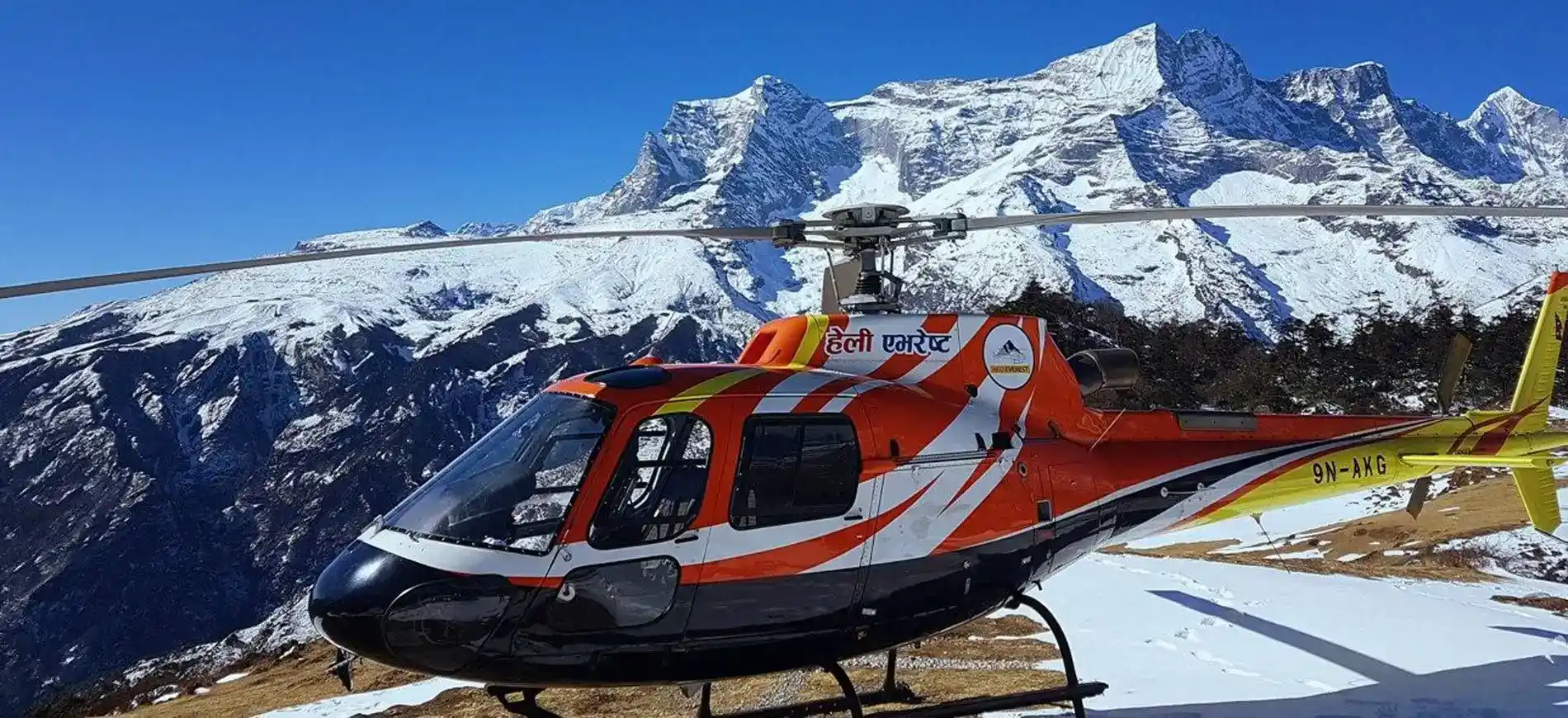
Fortunately, there is a better, more luxurious option. With our special Everest Base Camp Trek with Helicopter Return to Lukla, you get to experience the full adventure of hiking up to the base of the world's highest peak. Then, instead of walking back, you step into a helicopter for a thrilling, scenic flight over the Himalayas!
Below, we break down exactly how this unique luxury trek works, why traveling with a local company keeps you safe, and what you need to pack.
🤝 Why Travel with a Local Nepal Company & Expert Guides?
Booking your trek with a locally owned and operated agency like Sole Encounters Adventures makes a huge difference in your Himalayan experience.
- True Local Experts: We have over 10 years of expertise and live right here in Nepal. We know the trails, the weather patterns, and the teahouse owners personally. This allows us to secure the best rooms and ensure smooth logistics.
- Expert Sherpa Guides: Our guides are licensed, fluent in English, and born in these high-altitude regions. They know how to pace your walking steps so you do not get tired too quickly.
- Supporting the Local Economy: When you book directly with a local Nepal company, your money stays in the country. It directly supports local guides, porters, and mountain communities instead of going to international middle-man agencies.
🩺 Mountain Safety & Altitude Care
Your safety is our absolute number one priority. High-altitude trekking requires careful monitoring, and our team is trained to take care of you every single day.
- Daily Health Checks: Our expert guides check your oxygen levels (using a pulse oximeter) and monitor your heart rate every single morning and evening.
- Proper Acclimatization: Our itineraries include built-in rest days to help your body safely adjust to the thin air.
- Emergency Helicopter Readiness: Because we have direct lines to local helicopter operators, we can organize a medical evacuation instantly if altitude sickness strikes. Our team handles the logistics smoothly so you are never left stranded.
🚁 Understanding the Helicopter "Shuttle Rule" at High Altitudes
When you fly out from Gorak Shep (5,164m), the helicopter rules are different than at sea level. Because the air is incredibly thin near Mount Everest, helicopters lose a lot of their lifting power.
To keep everyone 100% safe, pilots follow a strict rule called the High-Altitude Shuttle Process:
⚖️ The Weight Limit Rule
Above 4,500 meters, a helicopter can only safely lift a maximum weight of about 240 kg to 250 kg. This usually equals just 3 passengers and their bags at one time.
🔄 How the Shuttle Works on the Mountain
If your trekking group has 4 to 6 people, the pilot will seamlessly split you into two smaller teams for safety:
- The First Shuttle: The helicopter lands at Gorak Shep and picks up the first 3 passengers.
- The Drop-Off: The pilot flies them down to Pheriche (4,371m), where the air is heavier. This quick flight takes only 5 to 7 minutes.
- The Second Shuttle: The pilot returns to Gorak Shep to pick up the remaining passengers.
- The Final Flight: Once the whole group is reunited at the lower altitude station, everyone boards together for the final scenic flight back to Lukla or Kathmandu.
🎒 Packing List & Strict Helicopter Weight Limits
Helicopters have strict luggage weight limits for flight safety. Your main duffel bag will be carried by a local porter during the hike up and will fly with you in the helicopter on the way down.
⚖️ The Golden Weight Rule
- Maximum Total Weight: 15 kg (33 lbs) per person.
- Duffel Bag Limit: Your main duffel bag should weigh no more than 10 kg to 12 kg.
- Daypack Limit: Your small carry-on daypack should weigh no more than 3 kg to 5 kg.
🥾 Essential Gear to Pack (Keep It Light!)
- The Big Three Essentials: One heavy down jacket (-15°C), one pair of broken-in trekking boots, and one high-quality sleeping bag.
- Clothing Layers: 2 quick-dry trekking shirts, 2 pairs of hiking pants, 1 warm fleece jacket, and 1 waterproof windbreaker jacket.
- Underlayers: 3 pairs of wool trekking socks, 3 pairs of moisture-wicking underwear, and 1 set of thermals.
- Head & Hands: One warm beanie, one sun hat, polarized sunglasses, and warm gloves.
- Electronics & Safety: A headlamp with extra batteries, a 20,000mAh power bank, water purification tablets, and a basic medical kit.
💡 Local Expert Tip: Leave your heavy suitcases and city clothes behind at your hotel in Kathmandu! We provide secure, free luggage storage for all our clients.
⛰️ Explore Our Other Signature Nepal Treks
If you want to explore different regions of Nepal, we offer expert-guided packages across the country:
- Everest High Passes: Challenge yourself on the legendary Everest Three High Passes Trek.
- Classic Everest Trail: Walk the traditional path up and down on the classic Everest Base Camp Trek Nepal.
- Annapurna Circuit: Cross the famous Thorong La Pass on the breathtaking Annapurna Circuit Trek.
- Manaslu Circuit: Experience wild landscapes and remote Tibetan culture on the Manaslu Circuit Trek.
- Langtang Valley: Enjoy a shorter, beautiful cultural trek close to Kathmandu on the Langtang Valley Trek.
📞 Let's Plan Your Dream Adventure!
Are you ready to skip the long walk down and fly like royalty? Don't leave your bucket-list vacation to chance. Get in touch with our local travel experts today for a free consultation, guaranteed departure dates, and personalized booking support.
- 🌐 Website: Visit us at www.soleencounterstrek.com to browse all packages.
- ✉️ Email: Reach out directly to info@soleencounterstrek.com for custom pricing.
- 💬 WhatsApp: Chat with us instantly at +977 9808979061 to lock in your spots!
Secure your dream trek with Nepal's trusted local team.Click Here to Book Your Everest Helicopter Trek Today!👉
Recent Posts
.jpg)
3rd Jul, 2025
.jpg)
4th Jul, 2025
.jpg)
4th Jul, 2025
.jpg)
7th Jul, 2025
.jpg)
8th Jul, 2025
.jpg)
8th Jul, 2025
.jpg)
8th Jul, 2025

10th Jul, 2025